
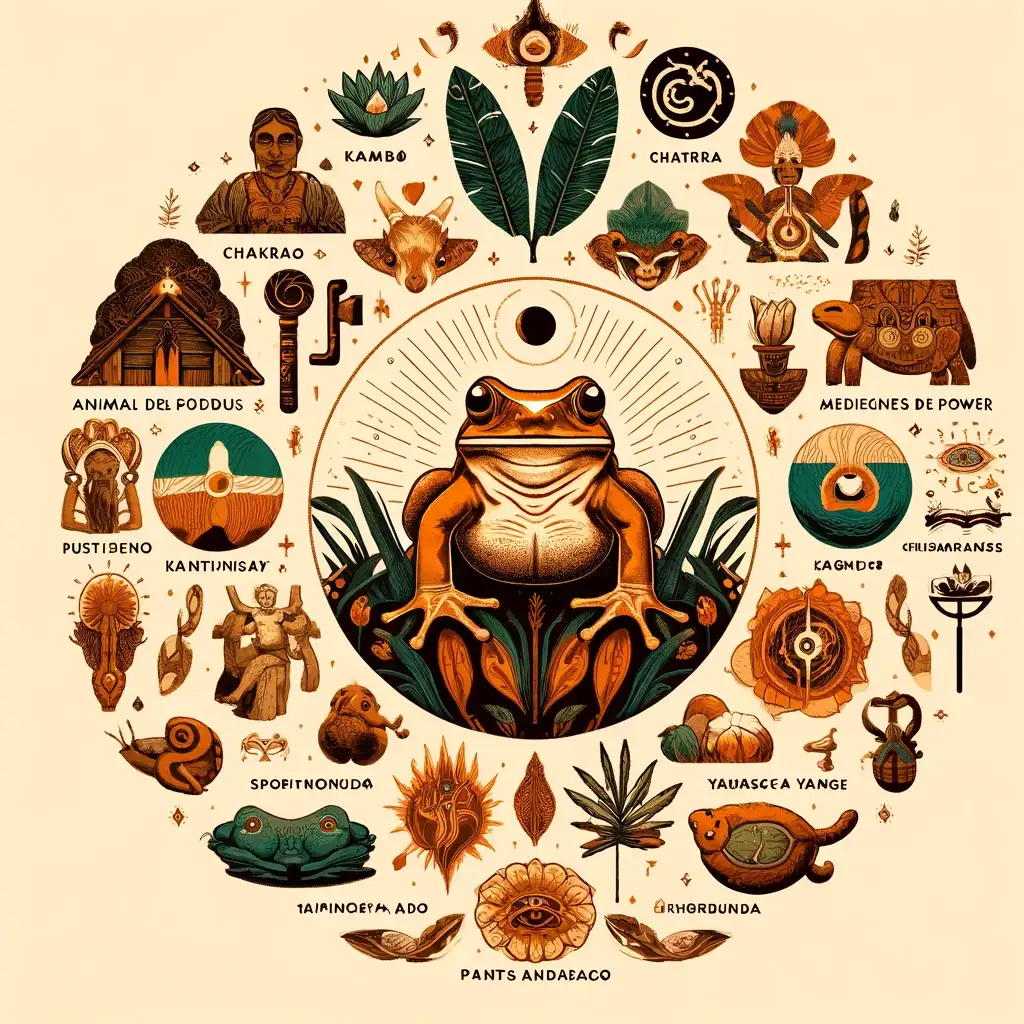
Kambo refers to the skin secretion of Phyllomedusa bicolor and to practices involving it. Understanding its Amazonian background means asking where an account comes from and what it actually supports. Traditional meaning, the animal itself and medical evidence are different subjects.
Which Amazonian traditions are documented?
A 2007 ethnography by Edilene Coffaci de Lima and Beatriz Caiuby Labate discusses hunting-related uses among Katukina, Yawanawá and Kaxinawá in southwestern Amazonia, and their later urban reinterpretation in Brazil. This is a specific cultural account, not a single belief shared by every Amazonian community. A separate 1993 pharmacological paper discusses use among the Matsés of Peru.
Names, stories and purposes need their own attribution. Claims that every present-day ceremony follows an unchanged, two-thousand-year-old practice go beyond the evidence used here.
The frog and its secretion
The American Museum of Natural History lists Phyllomedusa bicolor in the family Phyllomedusidae. Kambo is derived from a frog, not a plant. The living animal should not be reduced to a product or confused with a different amphibian because both are described as “frog medicine.”
A claim that collection is harmless or sustainable needs evidence about the actual practice. Respectful language alone cannot establish animal welfare.
Does traditional medicine mean a proven treatment?
“Traditional medicine” describes a cultural use; it does not establish clinical effectiveness. Similarly, “jungle vaccine” is not evidence of vaccination or protection against disease.
The Australian health regulator’s document prepared for its 2021 consultation identified serious health risks and no clinical evidence of medical benefit. That medical assessment and the study of cultural meaning address different questions. Neither should be used as a substitute for the other.
Whose knowledge is being presented?
A useful account identifies its sources and avoids presenting Amazonian peoples as interchangeable. References to Indigenous origins do not, by themselves, establish community authorization of a commercial offering or the qualifications of a session provider.
A way to read this subject
Our editorial approach is to make room for cultural understanding while examining health claims carefully. Learning about kambo does not require taking part in it. It should not replace medical assessment or treatment for a health concern.

