
Marcela Gómez
Therapist and cofounder of Ancestrina
I accompany individuals and couples with both emotional depth and a practical perspective. I care about what a person feels, and also about how they are living: the decisions they make, the conversations they need to have and the ways of relating they want to change.
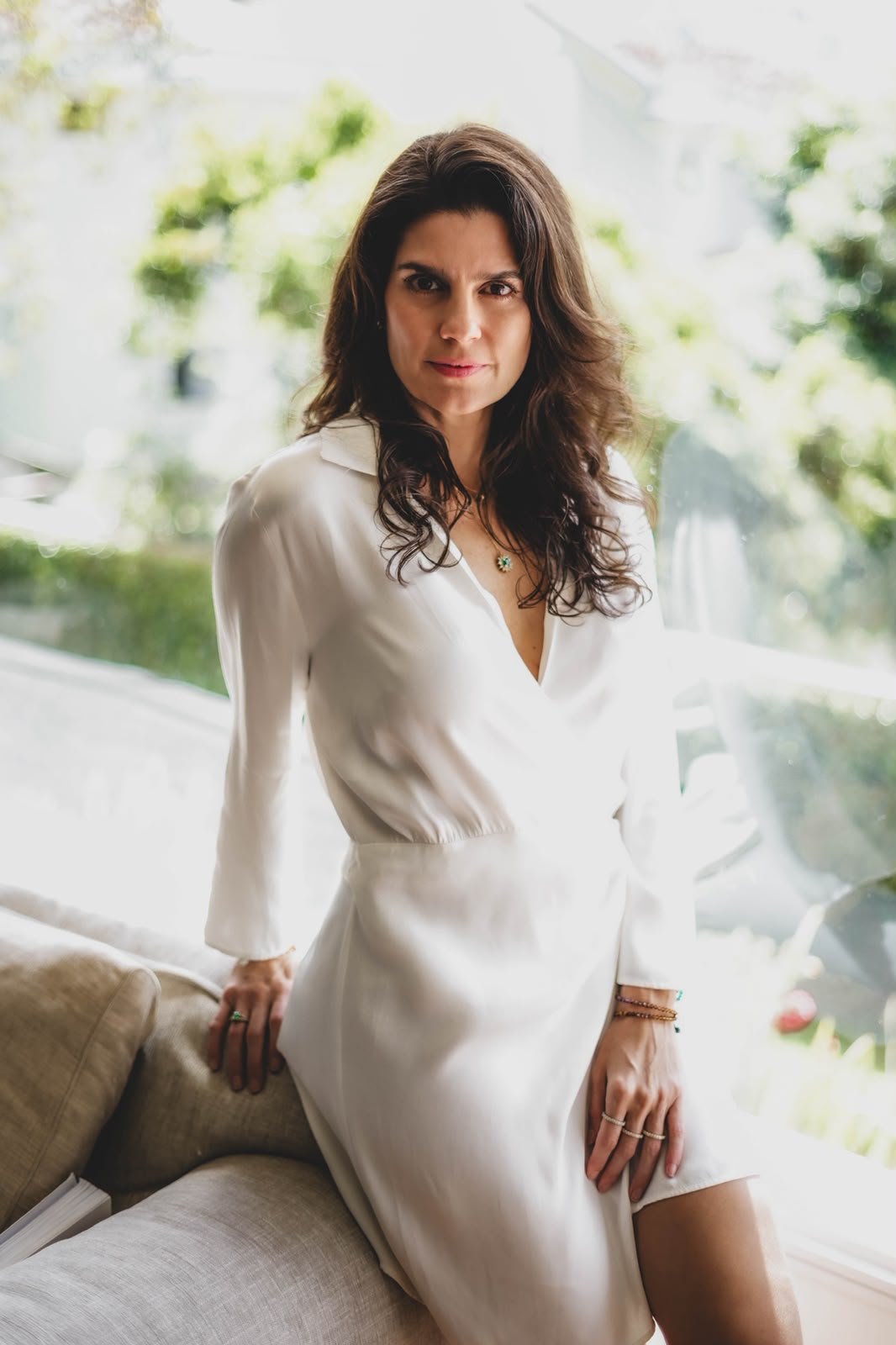
What has shaped my practice
My path towards therapy did not begin with a decision to become a therapist.
I studied Business Administration and Finance at Universidad de los Andes and then completed a master’s degree in International Business in London. My early professional years were in business and finance: a life oriented towards achievement, structure and performance. For a long time, that was the path I had imagined for myself.
At the same time, another search had begun. I was interested in questions about wellbeing, happiness and meaning, and I devoted more and more time to understanding myself.
I attended my first Vipassana retreat in 2009. Years later, I deepened my understanding of mindfulness, compassion and the science of happiness through training at Stanford University and UC Berkeley. I continued my journey in transpersonal psychotherapy and integrative Gestalt, also exploring systemic perspectives and body work. This journey was enriched by experiences such as Clown Esencial with Alain Vigneau and Gestalt sexuality with Albert Rams.
At the time, I was not building a profession as a therapist. I was trying to understand my own experience and, through it, to understand human beings more deeply.
My father’s illness and death, and later my divorce, marked a turning point. Several of the structures on which I had built my identity no longer held in the same way. Personal work became central in my life.
The shared practice with Víctor at Ancestrina deepened that process. I continued working on myself and learning while accompanying people. Gradually, what had begun as a personal search also became the work I wanted to devote myself to.
I did not come to therapy because I had a theory I wanted to teach. I came because I experienced in my own life the distance between understanding something and actually changing it.
How I accompany people
My experience in business still informs how I work. It gave me a structured way of thinking: organizing information, looking at whole systems, asking concrete questions and bringing a conversation from the abstract towards real decisions.
I can go deeply into emotion and, at the same time, I need the process to stay grounded.
When someone comes to me, I want to understand the problem they bring without assuming that it is the whole of what needs attention. I ask what they fear, what they need, what they are trying to protect, what they learned in their history and what they may be repeating without realizing it.
I also know from within how far apart a life that works well on the outside and a life that truly feels like your own can be.
Responsibility without blame
An important part of my work is helping each person recognize their own part in what they are living through.
In couples work, this does not mean everything is fifty-fifty or that the other person’s behaviour is justified. It does not mean making someone responsible for what another person does.
Alongside looking at the other person, I want each person to be able to ask: What am I doing here? What am I sustaining? What am I avoiding? What am I expecting my partner to resolve for me? How do I respond when I am afraid?
Looking at our own part is not a search for another reason to punish ourselves. It is a way to recognize where we can act and which decisions are still in our hands.
Understanding is not enough
Understanding what is happening to us is part of the process, not its end point. I hope that understanding gradually finds expression in how we live and relate to others.
It might take the form of a conversation that once felt impossible, a different boundary, a long-deferred decision or a greater ability to feel without immediately reacting.
I pay attention to those concrete changes: what begins to become possible, what remains difficult and how the work done in therapy can enter everyday life.
The decision remains yours
My work is not to tell you how to live or shape you into someone who better meets another person’s expectations.
In couples work, I do not assume that preserving the relationship is always the right outcome. Nor do I assume that separating is.
I want each person to recognize more clearly what they desire, what they fear, what belongs to their history and what they are choosing today. Accompanying that process does not mean taking the place of the person making the decision.
A life that feels like your own
One question runs through my path and my way of working:
How much of the life I am living truly feels like my own?
I want to explore how much of our decisions comes from desire and how much from fear, the need for approval, family loyalties or old ways of protecting ourselves.
I am not trying to build a more “correct” version of someone. I want to help them recognize what still makes sense to them, what needs re-examination and how they want to live now, with greater freedom and responsibility.
My work at Ancestrina
I currently accompany individual therapy, couples therapy and one-off consultations. I work in Spanish and English.
For online work, you can choose to work with Víctor or with me, according to your preference and our availability. If you begin with me, I remain your therapist throughout the process.
The processes I accompany include relationship crises, emotional distance, recurring conflicts, loss of intimacy and rebuilding trust.
I also work with people facing grief, separation, major life changes or times when the way they have been living no longer serves them, even if they do not yet know what comes next.
In these processes, I am interested in helping people revisit what they learned, recognize their ways of protecting themselves and make decisions that can help them build a life that feels more their own.
A shared practice
Víctor Silva and I are partners, therapists and cofounders of Ancestrina. We share a project and a therapeutic practice to which each of us brings our own path and way of accompanying people.
In the in-person immersive process, we work together, both accompanying the same person or couple.
Two therapists. One process.
Explore the immersive process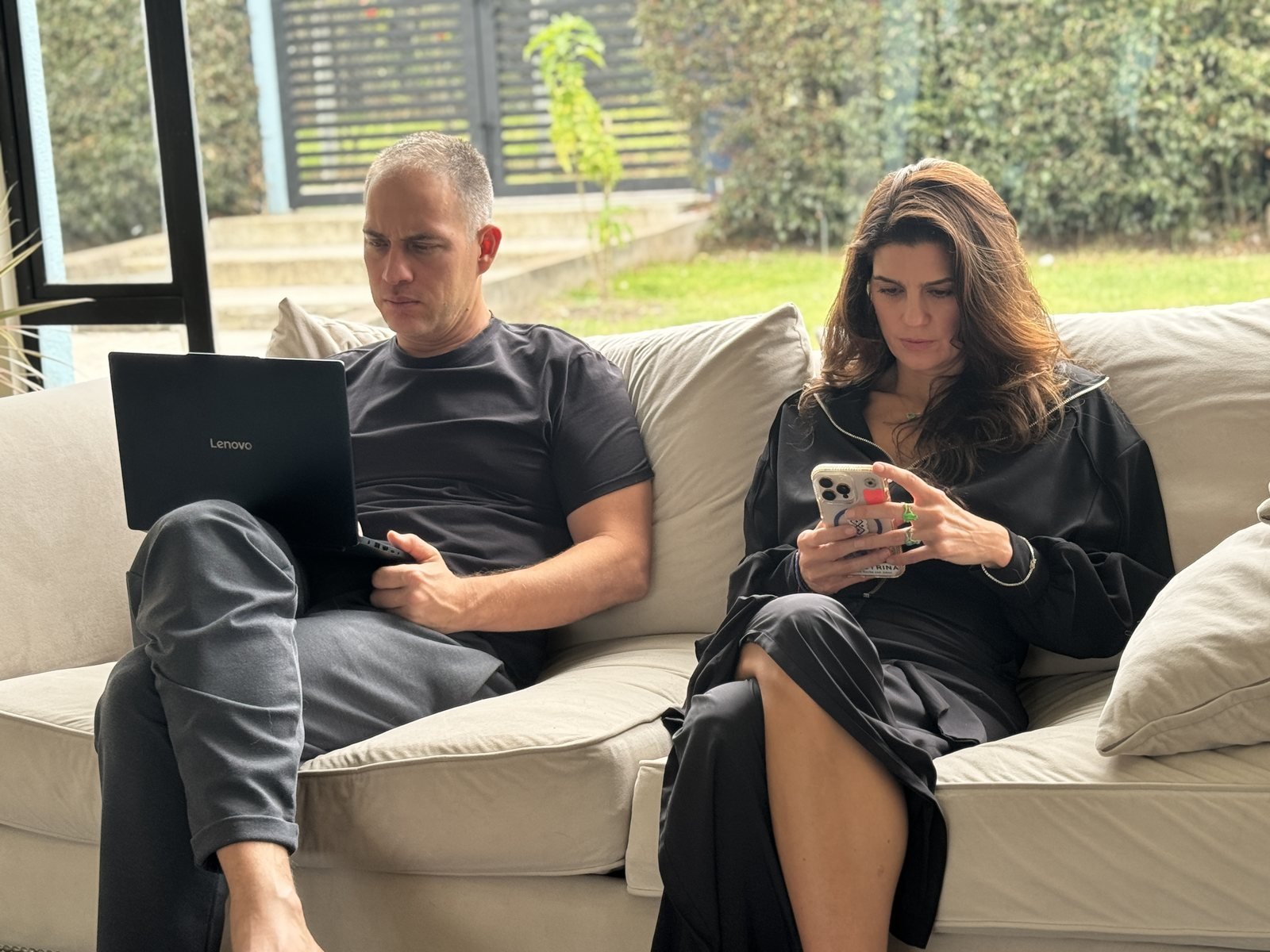
MAT in my practice
Víctor Silva created MAT. Within Ancestrina, I participate in its clinical application and contribute to its practical development through our therapeutic work.
Learn about MATIf you would like to work with me
You do not need to arrive with a complete explanation of what is happening. You may be facing a specific difficulty, a relationship crisis or a moment when you need to reconsider how you are living.
You can ask about availability at Ancestrina and say that you would like to work with me.

