
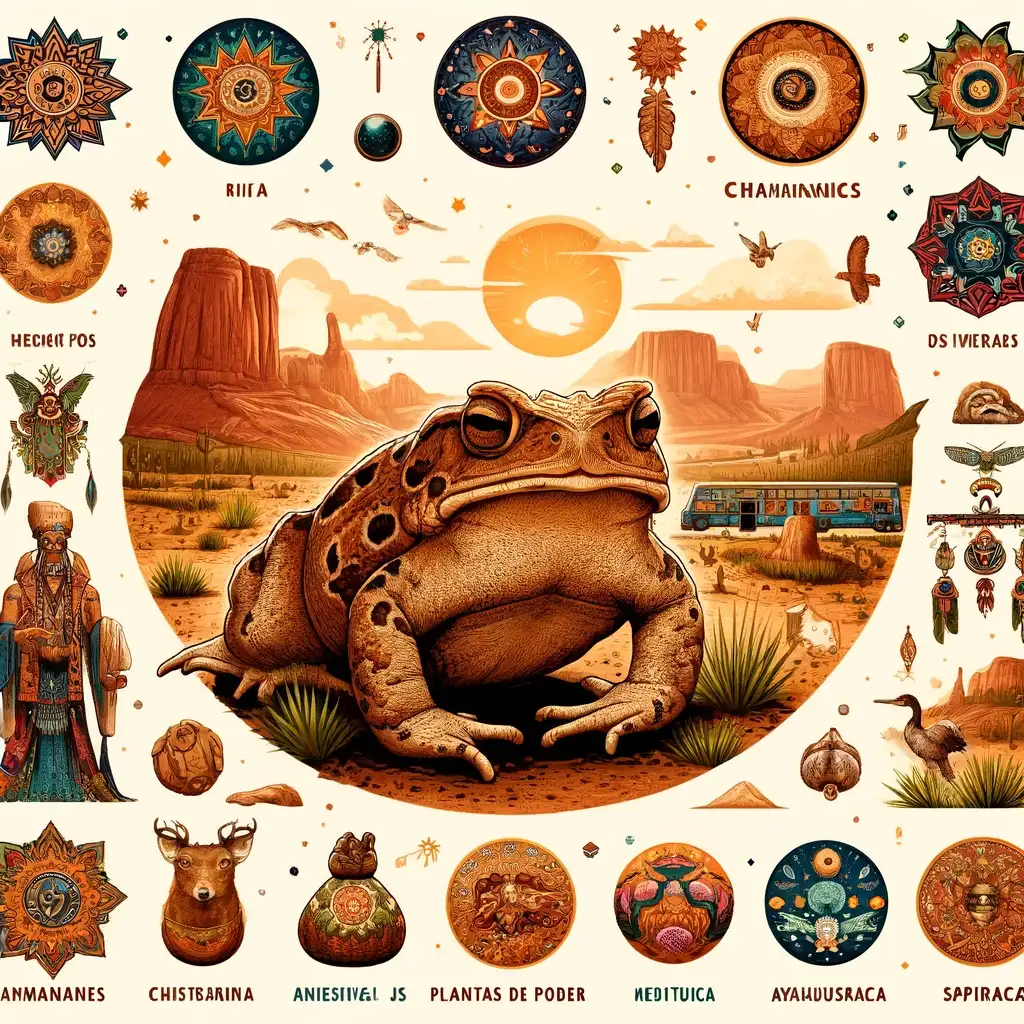
A Bufo experience can bring difficult-to-describe sensations and questions about identity, life or spirituality. Understanding these accounts requires distinguishing lived experience, personal interpretation and research findings. An experience may be meaningful to someone without supporting a promise of healing.
What a Bufo experience refers to
In this context, Bufo refers to contemporary practices associated with the secretion of Incilius alvarius and with 5-MeO-DMT. The animal, the substance and the ceremony are often discussed together, although they describe different things. Calling something a ritual does not establish its contents, its history or the qualifications of its facilitator.
Setting, expectations and the language used to describe an experience all form part of how people understand it. A spiritual description offers a framework of meaning; it does not certify clinical care or predict an identical experience for everyone.
Unity, loss of self and accounts of transformation
In a 2019 observational study by Uthaug and colleagues, participants reported ego dissolution and feelings of unity. There were 42 before-and-after assessments, but only 24 at four weeks, with no control group. These findings cannot promise the same outcome to someone else.
Language such as “dying and being reborn” can describe a subjective experience. It should not be read literally or treated as proof of a metaphysical reality. There must also be room for people who find no positive meaning or need time to understand what happened.
Cultural context and personal meaning
We do not attribute this practice to a people or an ancient tradition without specific documentation. This article focuses on contemporary experiences described in studies and on the meaning each person gives them.
Attributing a practice to a community requires identifying that community, its context and relevant sources. The symbolic presence of a toad in a culture is insufficient evidence that its secretion was used for psychoactive purposes.
Intensity does not determine an outcome
A 2021 phase 1 trial by Reckweg and colleagues involving 22 healthy volunteers studied a 5-MeO-DMT formulation under controlled conditions and recorded intense experiences and adverse events, including anxiety and nausea. Those findings do not make a ceremony a treatment or guarantee safety outside the study.
Clinical research must identify the substance, the population, follow-up and measured outcomes. An account of relief has personal value, distinct from the evidence needed to establish that an intervention treats an illness.
Making room for experience without imposing meaning
It can help to consider what was experienced, which interpretations appeared afterward and what remains uncertain. You do not have to adopt a group’s or facilitator’s explanation for your own experience to deserve a hearing.
If fear, confusion, sleep difficulties or problems with daily functioning persist afterward, seek health care. Everyday care and appropriate support take priority over pressure to describe everything that happened as spiritual transformation.

